How Online Reviews Help Contractors Get More Leads in 2026
Contractors rarely lose work because people do not need the service. They lose work because trust breaks down somewhere between the search result and the phone call.
That is why online reviews matter so much in 2026. A homeowner with a leaking pipe, a flickering panel, a wet basement, storm damage, or a kitchen remodel in planning mode is making a fast judgment. They are comparing names, star ratings, recent comments, response quality, and whether the business looks active and credible. If your company appears established and responsive, you move into the short list. If your profile looks stale or thin, the lead often goes elsewhere before your estimator ever has a chance.
For contractors asking how to get more leads for contractors without wasting budget, reviews sit at the center of the answer. They do not work alone, and they are not magic. But they influence what people click, who they call, and whether they trust what they find on your website. They also strengthen the rest of your local presence when paired with an accurate Google Business Profile for contractors, a fast site, and pages that clearly match the services and areas you actually serve.
Reviews are not just reputation, they are conversion fuel
Most contractors think about reviews as proof after the sale. In practice, reviews do far more than that. They shape the first impression long before a customer speaks to anyone in your office.
Google makes clear that a verified Business Profile helps customers find a business on Search and Maps and can show core details like hours, phone number, and website. That matters because your reviews usually appear in the same environment where a prospect is deciding whether to tap, call, or move on. People are not reading every word with equal attention. They scan for signals. A steady stream of real feedback, especially recent feedback, reassures them that your business is active and your team delivers what it promises.
This is especially true in home services because the stakes feel personal. A homeowner can forgive a plain logo. They will not forgive uncertainty when their crawlspace smells musty, the breaker trips every time the microwave runs, or water is spreading across the hardwood. Reviews reduce uncertainty. They answer the quiet questions prospects ask themselves: Do these people show up? Do they communicate? Do they solve the problem? Do they treat the home with respect?
When contractors improve review volume and review quality, they https://contractorreview394.quantlynix.com/posts/contractor-website-design-that-helps-roofers-plumbers-and-hvac-companies-get-more-calls often see benefits in places that are easy to miss. More profile clicks. Better call intent. Less friction on the estimate call. Fewer shoppers asking only for the cheapest price. In other words, reviews do not just create more leads. They can improve the quality of those leads.
Why 2026 puts even more weight on trust signals
Search behavior keeps moving toward faster decisions on smaller screens. That increases the value of visible trust signals. On mobile, people often make choices from a tight set of options, and your reputation has to work quickly.
A lot of contractors already have a serviceable site and some traffic, yet they still complain that the phone is not ringing enough. In many of those cases, the issue is not pure visibility. It is confidence. A site can rank for a local phrase, and a profile can appear in Maps, but if the business looks under-reviewed or unresponsive, the visitor stalls out.
There is another layer to this. Reviews are most effective when the rest of your online presence does not undermine them. If a prospect clicks through and finds a slow mobile site, missing service pages, outdated hours, or a confusing contact path, the credibility you earned from reviews evaporates. Google’s own guidance on page experience and Core Web Vitals reinforces this broader point. Speed matters, but so do mobile friendliness, HTTPS, and avoiding intrusive interruptions that get in the way of content. A contractor website that generates leads has to support trust all the way through the click.
That is why review strategy should never sit in a silo. It belongs inside your contractor lead generation website plan.
The businesses that win reviews usually make asking routine
The strongest review profiles are rarely an accident. They usually come from a process.
Google allows businesses to ask customers for reviews and recommends using a direct review link or QR code. It also makes clear that reviews must reflect genuine experiences and that incentives are prohibited. That is an important line. Too many contractors still look for shortcuts, and shortcuts create fragile reputations. A pattern of forced, awkward, or suspiciously similar reviews can backfire with customers even before platform enforcement enters the picture.
What works better is timing and consistency. Ask after the customer has experienced the result. For a plumber, that may be after the leak is fixed, the area is clean, and the invoice is understood. For an electrician, it may be when the panel upgrade is complete and the homeowner can see the work was organized and explained. For water damage restoration, the right timing can be delicate because the client is stressed. In those cases, asking after a major milestone, rather than in the middle of the disruption, tends to feel more human.
The ask itself should sound normal, not scripted to death. A short request from the office or technician, followed by a simple review link, often performs better than a bloated message. People do not need a speech. They need a clear prompt at the right moment.
What a good review profile actually looks like
Contractors often focus only on star rating. That matters, but it is not the full picture. A useful review profile feels believable and current. It shows that the company has worked with real customers across time and has taken the time to respond.
These elements usually matter most:
- Genuine reviews from actual customers with enough detail to sound real.
- Consistent collection over time, not a sudden burst followed by silence.
- Recent activity, which reassures prospects that the company is still active and accountable.
- Thoughtful responses from the business, especially when the customer shares specifics.
- Alignment between the review themes and the services you want to sell.
That last point deserves more attention. If you want more remodel leads but your reviews mention only handyman jobs, you may still struggle to convert larger projects. If you want to grow emergency mitigation, reviews that mention responsiveness and communication under pressure can carry real weight. Reviews help most when they reinforce the exact kind of trust the next buyer needs.
Google Business Profile is where reviews become lead opportunities
For local contractors, the review conversation almost always connects back to the profile itself. A Google Business Profile for contractors is not just an online listing. It is one of the main places where prospects evaluate whether to contact you.
Google says service-area businesses can use a Business Profile with one central office or location and a designated service area. If you do not meet customers at your address, the address should be hidden, and your phone number or website should represent that individual location. That guidance matters because contractor profiles often get set up sloppily. A profile that misrepresents where you operate or how you serve customers creates friction from the start.
Google also recommends keeping service areas accurate and specific, using cities, ZIP codes, or other places served. This becomes especially important when reviews mention location-specific experiences. If your profile says one thing, your website says another, and your reviews seem to come from all over with no clear geographic focus, customers can get confused about whether you actually serve their neighborhood.
A clean profile backed by strong reviews does several jobs at once. It helps people discover you. It gives them enough confidence to click or call. It gives Google consistent location and service information. And it creates a more seamless path from search to inquiry.
For contractors with multiple specialties, the profile also helps filter intent. A plumbing company, an electrician, a foundation repair crew, and a kitchen remodeler all rely on trust, but the buyer psychology differs. A burst pipe call is urgent. A solar consultation is more deliberate. A fence replacement may be price-sensitive and comparison-heavy. Reviews help each business speak to those differences without changing the core mechanism, which is reassurance.
Reviews work better when the website is built to cash in on them
A surprising number of contractors do the hard part, they earn customer praise, then send prospects to a website that fails to convert.
A contractor lead generation website should feel like a continuation of the same trust signals the prospect saw in search. If your profile shows recent reviews, but your site is thin, slow, or vague, people hesitate. That is why website quality matters so much in any discussion of how to get more leads for contractors.
Google recommends good Core Web Vitals for search success, with LCP under 2.5 seconds, INP under 200 milliseconds, and CLS under 0.1. It also points to mobile friendliness, HTTPS, and avoiding intrusive interstitials as part of page experience. Those are not abstract technical preferences. They shape whether a stressed homeowner stays long enough to act.
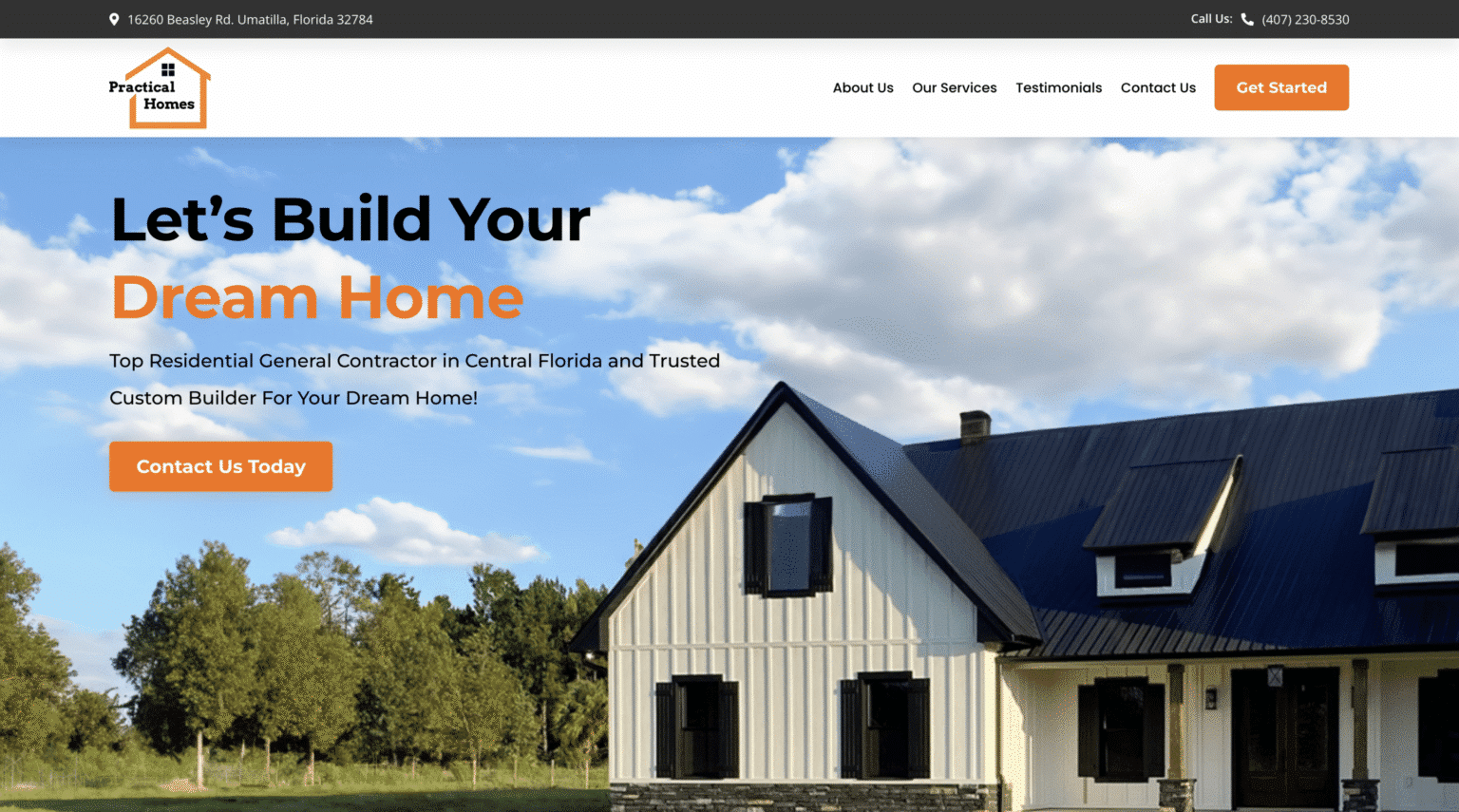
Think about a few common contractor categories. Plumbing website design should make urgent contact simple, because the visitor may be standing in a puddle. Electrician website design needs clarity and reassurance, because people are inviting a trade professional into a potentially hazardous situation. Foundation repair website design has to calm fear and explain enough for the homeowner to take the next step. Water damage restoration website design should reduce panic and make immediate contact obvious. Kitchen and bath remodeling website design often needs more visual confidence and a smoother path to consultation. Solar company website design may need to support a longer evaluation process. Fence contractor website design should remove uncertainty around service areas, project types, and scheduling.
Different trades need different emphases, but the rule stays the same. If reviews create intent, the site must convert it.
There is also a technical baseline many companies still miss. Google says pages must be publicly accessible and not blocked in order to be indexed. It sounds basic, but plenty of redesigned contractor sites launch with sections hidden from search or hard for Google to read. If your service pages are not accessible, even great reviews cannot support pages that never fully enter the search ecosystem.
Service pages, local pages, and review relevance
Reviews do not need to live only on the profile. Their themes should echo through the pages where prospects land.
If you serve several cities or ZIP codes, accurate service-area pages can support local SEO for home service businesses, provided they reflect the places you truly serve. Google’s guidance on service areas is clear that specificity matters. The point is not to create dozens of flimsy pages stuffed with town names. The point is to align your service geography, profile, and website so customers and search engines see a consistent footprint.
The same applies to services. If your reviews repeatedly mention fast dispatch for water extraction, and you have a well-built water damage restoration page that matches that expectation, conversion gets easier. If customers praise your communication on remodels, your kitchen and bath remodeling page should support that strength with clear next steps and trustworthy information. Good local SEO for home service businesses is often less about tricks and more about consistency.
Structured data can help here as well. Google’s local business structured data guidance allows sites to mark up details such as business hours, departments, address, geo information, and phone number. Used correctly, that helps Google understand the local business information on the site. It is not a substitute for reviews or strong content, but it can support a more coherent local presence.
Responding to reviews is part of lead generation
A neglected review profile sends a subtle message that many owners miss. It suggests the business does not pay much attention once the job is done.
Google recommends responding promptly to reviews. That advice matters for more than courtesy. Prospects read those responses. They notice whether the business sounds defensive, canned, or absent. A short, thoughtful response can reinforce professionalism. It shows there are real people behind the company and that feedback does not disappear into a void.
This is particularly useful when a review mentions specifics about the job, timeline, or crew. A grounded reply confirms that your operation is organized enough to remember the customer experience. Even simple acknowledgments can help, provided they sound human.
Negative reviews deserve judgment. Not every complaint should trigger a long public debate. A calm response that addresses the concern without oversharing usually works better than trying to win the argument. The goal is not to prove you are flawless. It is to show future customers that you handle friction professionally.
Missed calls, slow follow-up, and the hidden leak in the bucket
There is an uncomfortable truth in contractor marketing. Many companies focus on generating more leads while mishandling the ones they already have.
Google’s local lead guidance indicates that missed-call handling matters. If a customer misses a call and stays on the line long enough, that can qualify as a lead in certain Google lead contexts, and Google supports replying quickly to leads through its systems. The broader lesson applies beyond any one platform: response speed matters.
Reviews and responsiveness reinforce each other. If your reviews promise quick communication, but your office takes half a day to return calls, trust collapses at the point of contact. On the other hand, when a contractor has strong reviews and a disciplined call process, conversion often improves without any dramatic change in traffic.
This is where the best lead generation work starts to feel less like marketing and more like operations. The website, the profile, the reviews, the phone process, and the follow-up all have to agree with each other.
A practical review process contractors can sustain
The review process that lasts is usually simple enough to survive busy weeks. It does not depend on the owner remembering every time.
A workable system often includes:
- Choosing the right moment to ask, after the customer has clearly experienced value.
- Sending a direct review link or sharing a QR code so the process is easy.
- Training office staff and field staff to make the ask in a natural, consistent way.
- Monitoring new reviews and responding promptly.
- Looking for patterns in feedback and using them to improve service and website messaging.
This kind of system is especially effective when paired with your broader digital assets. If several customers praise cleanliness on remodel jobs, that should not stay buried in the review feed. It can influence how you position your kitchen and bath remodeling website design. If electrical clients consistently mention professionalism and clear explanations, that can shape your electrician website design messaging. If homeowners talk about how quickly crews arrived after flooding, your water damage restoration website design should support that promise with a fast path to contact.
The contractors who benefit most from reviews are not always the largest
It is easy to assume online reviews mainly help large brands with high job volume. In practice, smaller local contractors often gain the most because reviews compress the trust gap.
A well-run local company with a focused service area, an accurate profile, and a reliable review process can compete above its weight. The company does not need to look like a national chain. It needs to look dependable, relevant, and reachable.
That is one reason reviews pair so well with local SEO for home service businesses. Searchers are often trying to hire someone nearby who can solve a specific problem. If your digital presence clearly reflects the work you do and the places you serve, reviews can become the tipping point that gets you the call.
The real role of reviews in 2026
Reviews are not a side task for the office manager. They are part of the sales path.
In 2026, the contractors who consistently win online are the ones who understand that reputation, visibility, and usability feed each other. A verified and accurate Business Profile helps people find you. Genuine reviews help them trust you. A fast, mobile-friendly, publicly accessible site helps them act. Clear local and service information helps Google understand what you do and where you do it. Prompt responses, both to reviews and to incoming leads, keep the momentum from dying at the worst possible moment.
That is the practical answer to how to get more leads for contractors. Do not chase lead volume while ignoring the signals that make people feel safe enough to call. Build the kind of contractor website that generates leads, support it with a clean local presence, and treat review collection as part of the job, not an afterthought.
The contractors who do that are not just collecting stars. They are building a more convincing business at every step where a prospect has to say yes.